
How to choose the right PPE for the job
What should you look for when choosing PPE for high-pressure cleaning and UHP water jetting? This guide walks you through the key considerations so you can create a safer workday for operators, coworkers, and everyone else around the worksite.
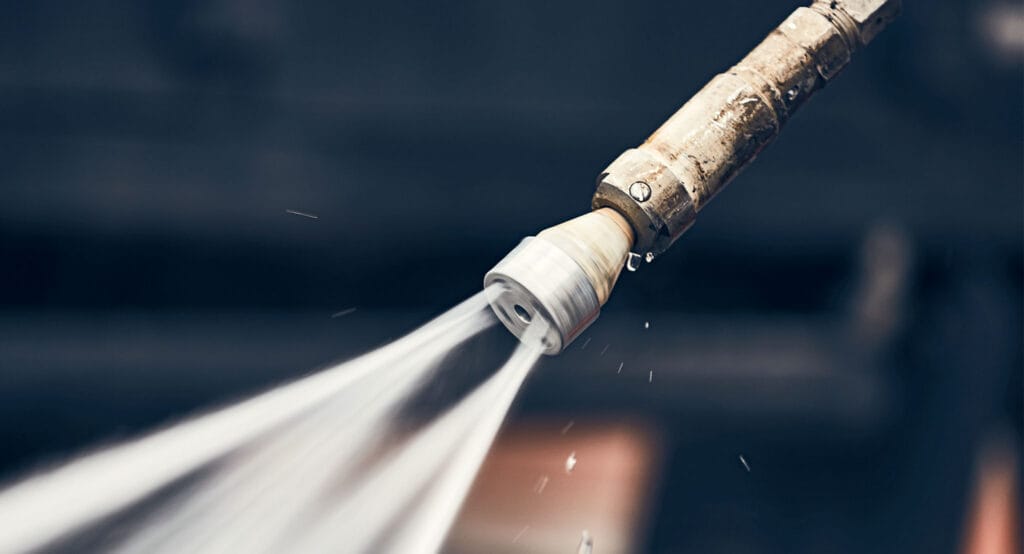
High-pressure water jetting comes with serious risks, from equipment failure and sudden loss of control to ricochets. If a person is struck by a high-pressure jet, the consequences can be lifelong or, in the worst case, fatal. Eye injuries can occur from as little as 7 bar / 100 psi, and skin can be penetrated from 80 bar / 1 160 psi. A barely visible entry wound can lead to severe internal damage and infection when contaminated water is forced into the body. Using PPE properly matched to each water jetting job can be the difference between returning home safely and not at all. And just like fastening a seatbelt before you drive, wearing PPE isn’t about expecting an accident – it’s about being prepared for the unexpected.
Working pressure
The first thing to establish is the operating pressure: how many bar/psi will be used for the job? But pressure alone does not tell the full story – you also need to consider the type of nozzle, the number of jets, and the flow rate. Together with the distance between the nozzle and the impact point, and the speed at which the high-pressure jet sweeps across the surface in case of an accident, these factors determine the true impact of the jet.
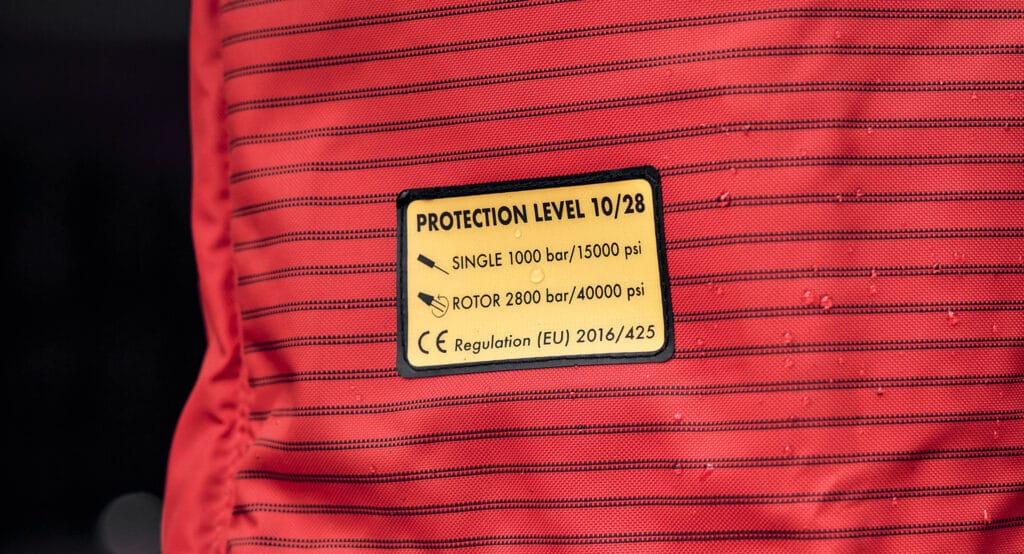
Choose PPE with a protection level that matches the planned operating parameters – preferably with a margin for changing conditions.
Protection from head to toe
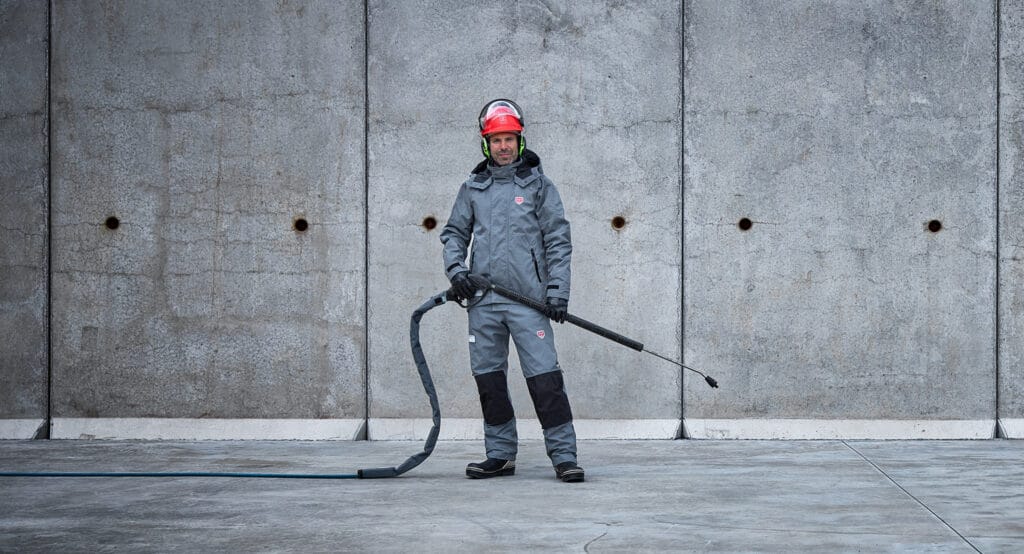
Once you know the required protection level, the next step is to ensure the operator is covered from head to toe. Don’t forget hands and feet – they are among the most commonly injured body parts in water jetting. Modern PPE is designed with a combination of protective and non-protective areas. The protective areas cover the body’s most exposed regions, while the non-protective areas are there to give the garment the flexibility and freedom of movement operators need to work safely.
Because protection is not uniform across the entire garment, it is essential that the protective zones match the operator’s actual risk areas – and that every operator knows exactly where they are protected and where they are not. The PPE must be worn correctly and properly adjusted.
Matching PPE to the task
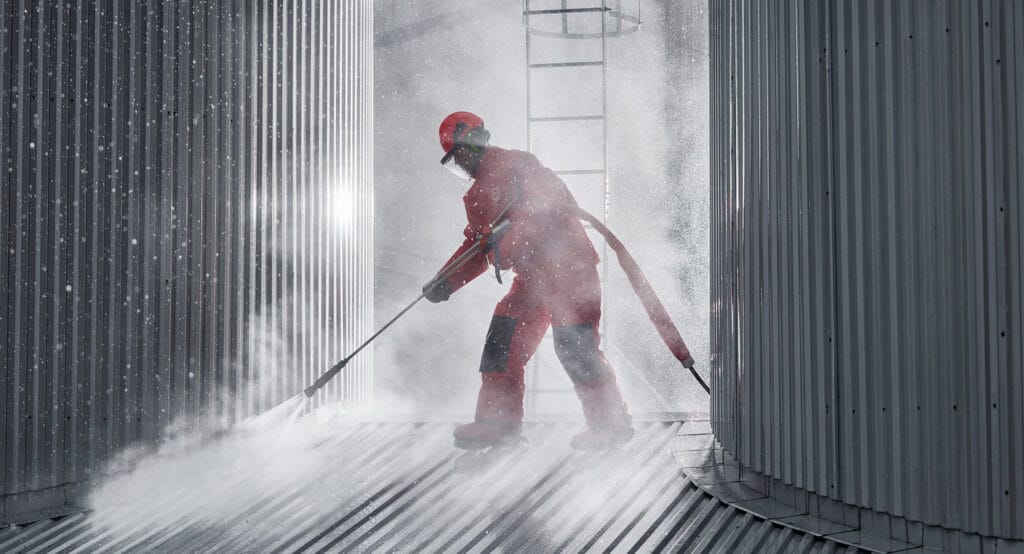
The type of PPE must also match the job. Water jetting PPE is typically available as overalls, jackets, pants, vests, and aprons. The best choice depends on whether the operator will stand mostly in one place or needs to move around, climb ladders, crawl, and so on, as well as whether several operators will share the PPE during a shift.
Comfort is key
If PPE is not comfortable to work in, there’s a risk it stays in the locker while the job is done unprotected. Good mobility is not just a convenience; it is an essential part of safety. When operators can move freely, they maintain better control, adopt stable working positions, and react more quickly if something goes wrong.
Staying comfortable during demanding water jetting, especially in hot conditions, can be challenging. Some manufacturers offer cooling or ventilation vests to be worn under protective clothing, or garments with built-in ventilation features in pants and overalls. There are also solutions that improve the overall work environment, such as protective operator booths that shield the operator from wind, sun, rain, and snow.
Certified protection
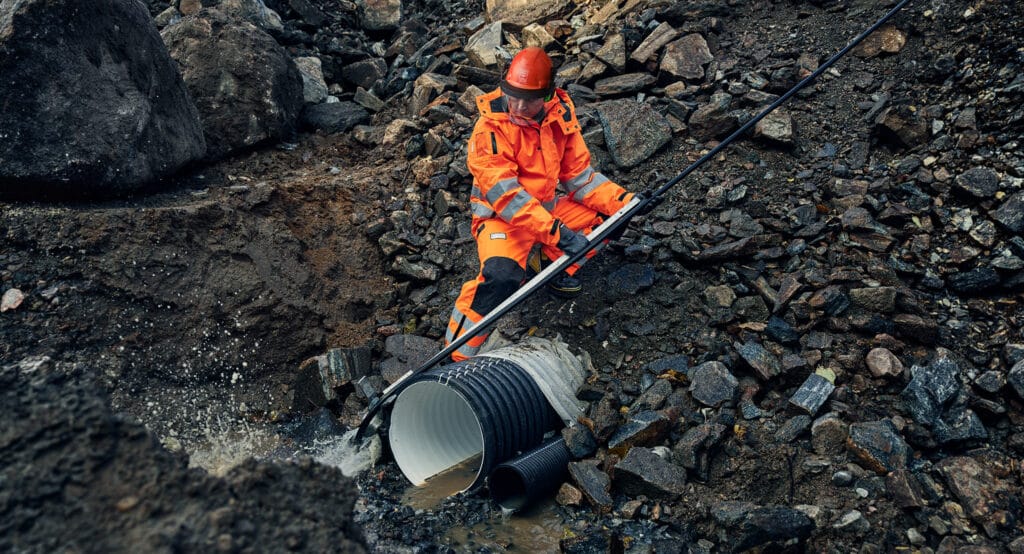
How do you know your PPE performs as promised? Choose PPE that is tested and certified for high-pressure jets. In the EU, work at 200 bar and above is legally required to be carried out using CE-certified protective clothing.
CE certification confirms that a product meets EU standards for safety, health, and environmental protection, and that it has been independently tested and approved according to EU legislation. Because the EU’s requirements are stringent, companies around the world rely on CE-certified garments as a trusted benchmark for reliable PPE. Ensure that the PPE is CE-certified specifically for high-pressure jets, and review the underlying test reports to confirm that the test parameters match the working conditions of the job at hand.
Areas that are difficult to protect with PPE
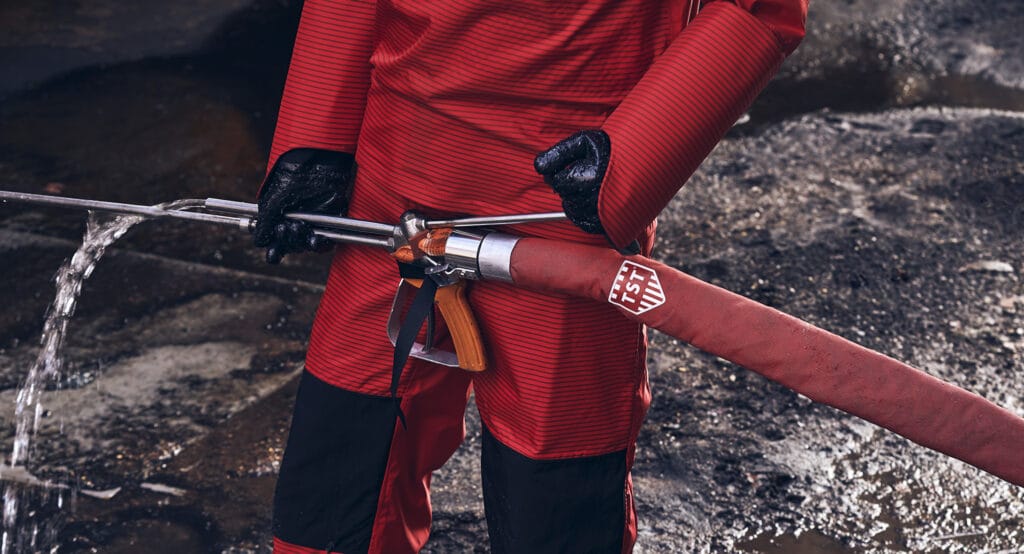
Some body areas are particularly challenging to protect with PPE alone. The highest risk for hose failure is often close to the water jet gun – unfortunately also close to vulnerable areas such as the abdomen, armpit, and neck. These parts of the body must remain flexible so the operator can move safely, which makes it difficult to add protection directly in the clothing. In these cases, dedicated hose protection becomes a crucial complement. By mounting hose protection where the hose connects to the lance, you add a layer of safety in case a coupling fails, a hose bursts, or a pinhole leak occurs.
Think about the entire workplace
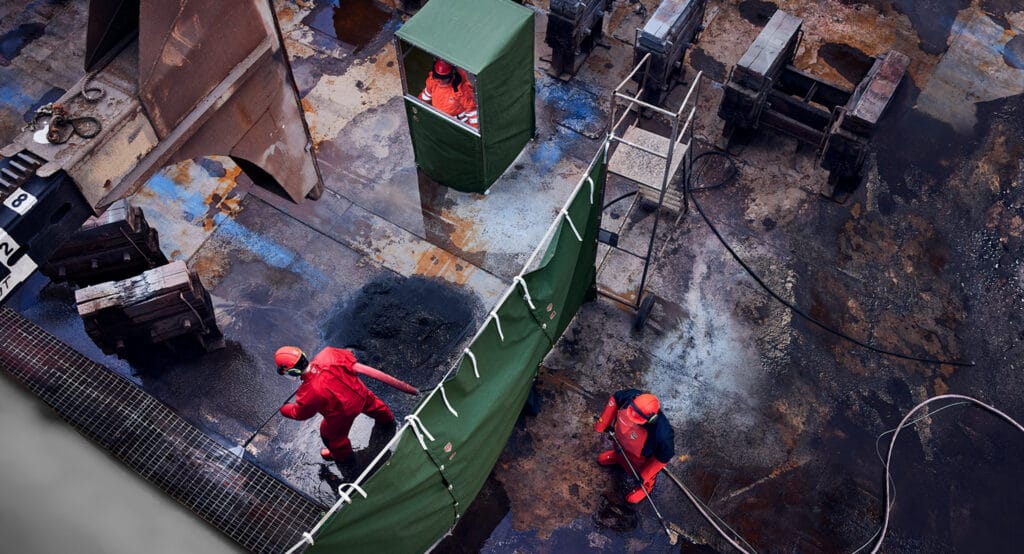
A safe water jetting job site involves more than the operator’s PPE. It also includes coworkers, other contractors, passers-by, and nearby machines and equipment. In the past, work zones were often shielded with improvised barriers made from wooden boards or whatever material happened to be available. Today, purpose-built products offer safer, lighter, and easier to transport, store, set up, and take down.
End-to-end protection
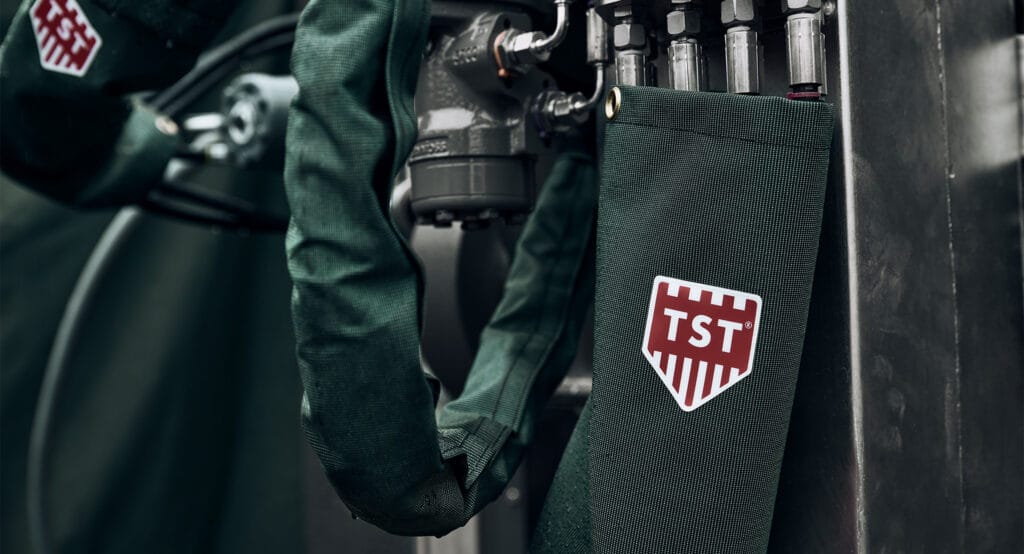
The hose system itself deserves careful attention. Couplings can pose a risk, which means pumps, foot valves, and hose connections must be inspected and maintained with safety in mind.
Think in terms of complete hose protection from one end of the system to the other. This may include hose protection at critical points, scuff guards to protect hoses from sharp edges and rough surfaces, extending hose life, and whip checks that secure the hose if a coupling breaks.
In the end, protecting people who work with high-pressure cleaning and UHP water jetting is about seeing the whole picture – from choosing PPE adapted to the impact of the jet, the task, and conditions, to ensuring that hoses and the surrounding worksite have the proper protective equipment in place. When all these elements work together, you create safer, more efficient water jetting operations where operators can work with confidence, and with the level of protection they truly need and deserve.
TST Sweden article published in WJTA Jet News, reprinted with permission.