
Why CE Marking Matters for Safety – from Europe to the U.S
High-pressure water jetting comes with significant risk, even at relatively low pressures. As little as 100 psi can injure the eye, and around 1,200 psi, water can penetrate the skin. At 2,900 psi and above, the demands on PPE become even greater. In Europe, this is the point where the strictest CE certification requirements apply. For anyone involved in the industry – from equipment suppliers and contractors to operators – one question is crucial: how can you be sure your PPE truly meets the standards for safety and performance?
“High-pressure water doesn’t care about borders. The risks are the same in Chicago as they are in Copenhagen.”
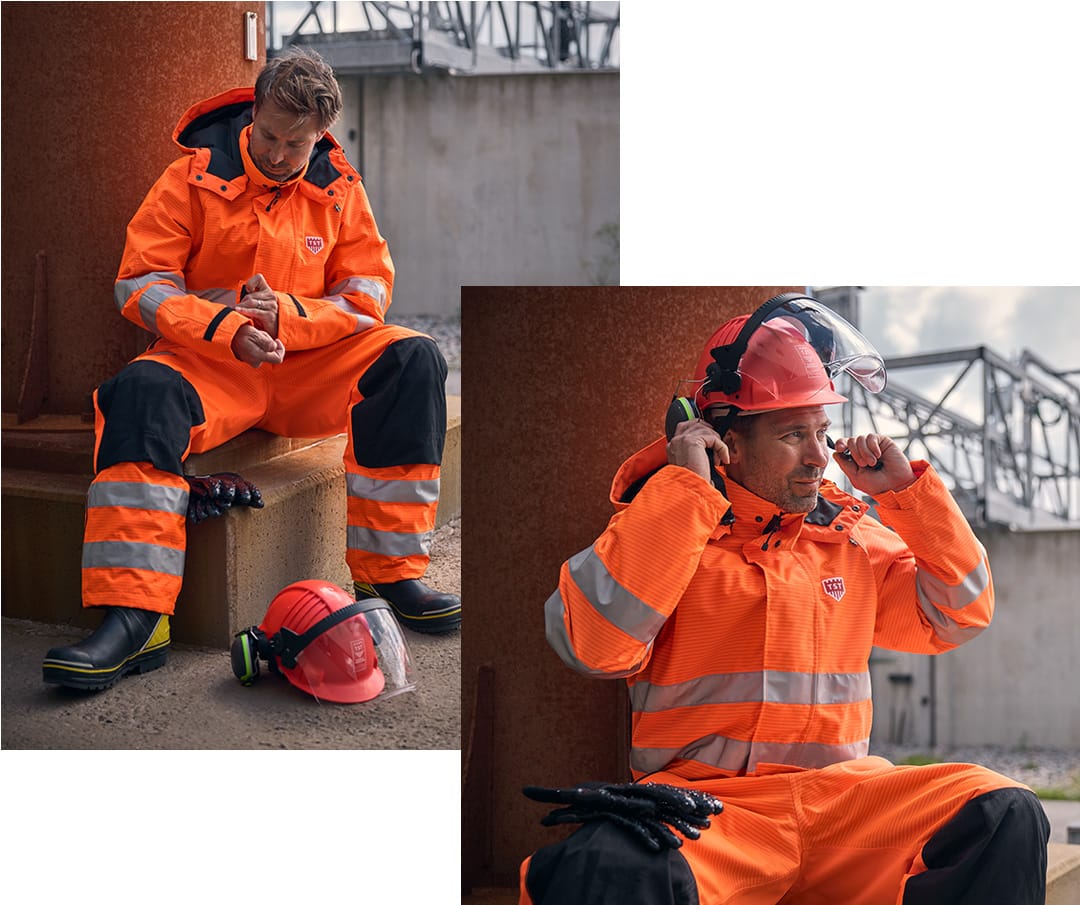
Every operator deserves PPE they can rely on, no matter where in the world they are.
Among all the safety standards out there, few carry the weight and credibility of the European CE Marking. In Europe, CE certification is mandatory for high-risk personal protective equipment. In the U.S., it’s not a legal requirement but it represents a globally recognized benchmark of safety and performance and proof that the gear meets some of the toughest standards in the industry.
High-pressure water doesn’t care about borders. The risks are the same in Chicago as they are in Copenhagen. The only question is whether you meet those risks with protection that has been tested, proven, and certified according to the toughest criteria in the world.
For U.S. companies, adopting CE-certified PPE also sends a clear message: safety is not negotiable, and minimum compliance is not enough. It’s about creating a safety culture where every operator knows they’re working in the best gear available, and every client knows you’re operating at a global standard, not just a local minimum.
This isn’t about importing European law. It’s about adopting a proven, tested, and audited safety framework that works. It’s about protecting companies’ most valuable asset, their people.
– At TST Sweden, we believe every operator deserves the best protection. And every industry leader should recognize that the CE Mark isn’t just a European regulation, it’s a gold standard worth adopting everywhere. The CE Mark isn’t just a label. It’s proof. And in high-pressure water jetting, proof is what saves lives, says Peder Lindström, Market & Sales Director at TST.
What the CE Mark Really Means
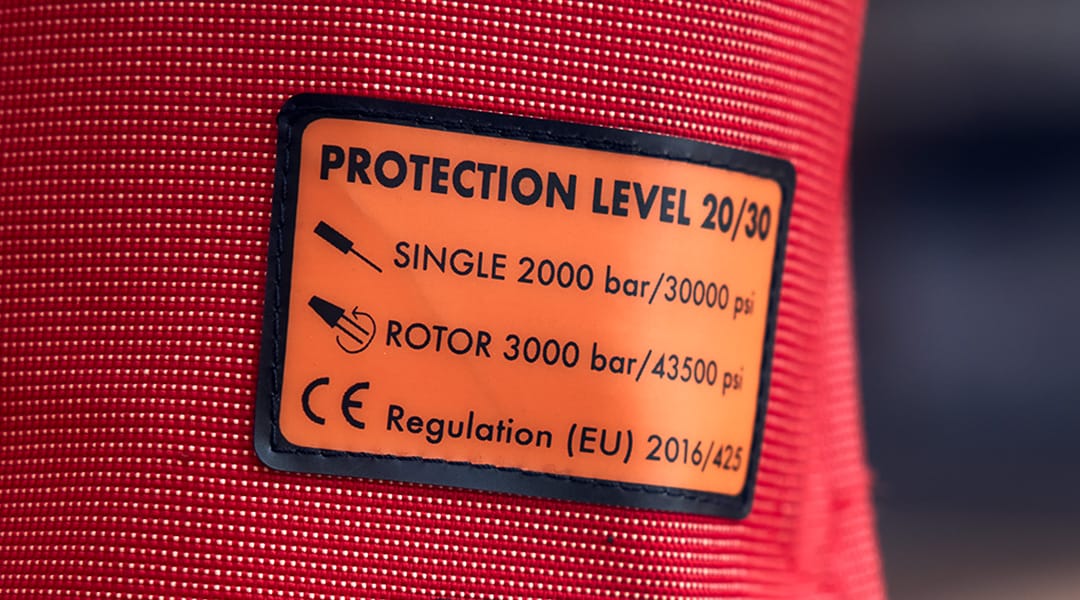
In Europe, the rules are clear. PPE intended for high-pressure water jetting at 200 bar (2,900 psi) or above falls under Category III — the highest risk classification in the European PPE Regulation (EU) 2016/425. This places it alongside protection against chemical burns, arc flash, live working, and even ballistic threats.
According to the PPE Regulation, all risks should be eliminated or reduced at the source before using personal protective equipment. In high-pressure water jetting, the pressure itself remains a hazard, making protective clothing the final and critical safety barrier. PPE complements — but never replaces — other safety measures.
CE Marking confirms that a product complies with the European PPE Regulation, which sets the minimum legal requirements for placing PPE on the EU market. To demonstrate compliance, PPE products must meet the essential health and safety requirements of the Regulation. Testing is carried out at specialized laboratories, and certification is issued by an accredited Notified Body, ensuring traceability and effective market surveillance.
– Once a product meets those requirements and passes an independent assessment by a Notified Body, it can carry the CE Mark. Certification is then maintained through ongoing quality control: the manufacturer must ensure every batch matches the approved product and is subject to regular audits. CE Marking is therefore less about a single moment of approval and more about an ongoing commitment to meet — and prove — compliance with stringent safety criteria, says Kristina Alderin, Certification Manager at TST.
For high-pressure water jetting PPE, there is currently no harmonized European standard defining exact test values for parameters such as pressure, flow, nozzle type, stand-off distance, or linear speed. Since variations in these factors can lead to very different impact forces, it is crucial to examine the test conditions applied in the certification process and ensure they reflect the real-world risks of the intended use.
Always base the choice of PPE on a thorough risk assessment of the equipment — including nozzle type, pressure, and flow — as well as the specific work environment. Make sure that the protected areas of the PPE cover the parts of the body most at risk for the specific job.
The U.S. landscape — a patchwork of standards
In the United States, there is no single, nationwide equivalent to CE Marking for high-pressure water jetting PPE. OSHA provides guidelines, manufacturers set their own specifications, and industry associations share best practices, but the result is a patchwork. That flexibility allows companies to follow different safety requirements and testing approaches, which can leave gaps in consistency and enforcement. What one company considers “adequate” may fall short of another’s standard, and without a harmonized benchmark, there is no universal measure for verifying PPE performance against the highest risks.
That’s why uniform safety standards matter. In an industry where the forces at play are extreme, the margin for error is razor-thin. When PPE is properly tested and certified, it’s designed to deliver the level of protection promised — helping to reduce the severity of injuries and protect lives. Without that assurance, operators face a far greater risk, and companies take on unnecessary liability by relying on unverified gear.
– We believe that if you want the best protection for your operators, you should demand the same high standards, no matter where your business is located, says Peder Lindström, Market & Sales Director at TST.
Our PPE is developed to protect against pressures from 200 bar (3,000 psi) up to 3 000 bar (43,500 psi), based on both laboratory testing and field experience. This pressure rating is determined through specific test methods that replicate real-world conditions, not by the CE Mark itself, and shows what the product has been proven to handle in practice.
– We don’t just meet the CE requirements; we build on them. Our gear is shaped by decades of feedback from operators in the harshest environments, from Scandinavian hydrodemolition crews working in freezing conditions to U.S. industrial cleaning teams dealing with heat, humidity, and confined spaces. Every production batch is audited to confirm that the quality, coverage, and performance match our certified products. These safeguards mean that when our equipment stops a jet, it’s not a lucky break, it’s the direct result of engineering, rigorous testing, and a system built around safety without compromise, says Peder Lindström, Market & Sales Director at TST.
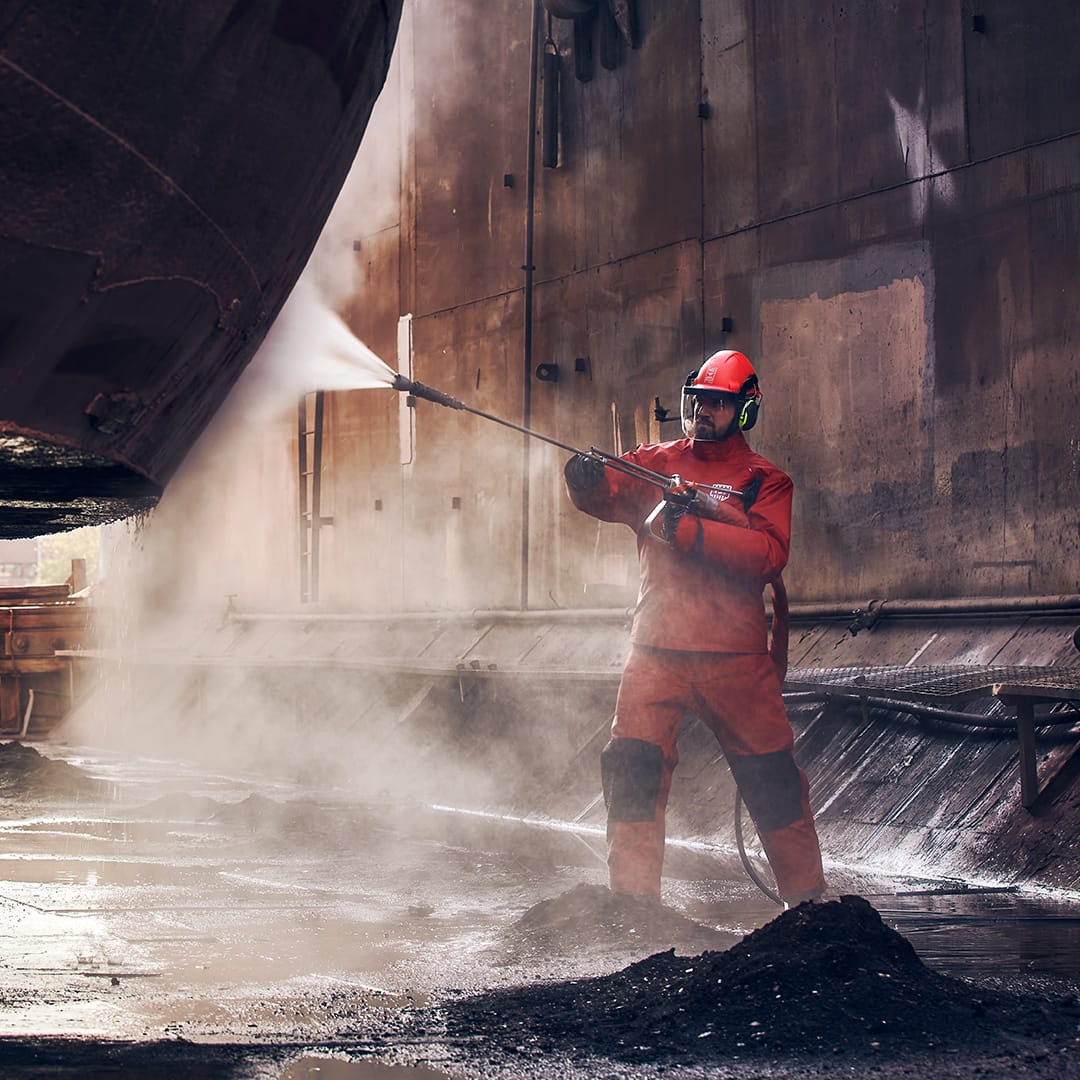
TST’s goal is to deliver the best PPE for water jetting on the market, created from decades of feedback from operators working in the harshest environments, and designed to exceed CE requirements.
Myth vs. Fact about CE in the U.S.
TST Sweden’s Certification Manager, Kristina Alderin, helps us address some of the most common myths and misunderstandings about CE Marking:
Myth: CE Marking only matters in Europe.
Fact: While CE is a European requirement, its safety benchmarks are recognized worldwide. Many U.S. companies adopt CE-certified PPE voluntarily to raise their safety profile.
Myth: CE-certified PPE is over-engineered for American needs.
Fact: High-pressure water jetting risks are the same everywhere. The standards behind CE certification are designed to protect against those risks, regardless of location.
Myth: CE compliance is just a marketing tool.
Fact: CE certification requires ongoing third-party oversight and compliance with strict European standards, something most U.S. PPE standards do not mandate.
Closing the Gap for a safer future for water jetting
CE Marking isn’t about changing U.S. regulations, it’s about choosing a proven, independently verified standard that works anywhere. For American water jetting companies, it’s a clear way to show that safety knows no borders.
– At TST, we believe every operator deserves PPE tested and certified to the highest standards. The CE Mark is more than a label, it’s trust you can wear, says Peder Lindström, Market & Sales Director at TST.
TST Sweden article published in WJTA Jet News, reprinted with permission.